If you’ve read my previous posts, you know I have complicated feelings about AI-generated content. I’ve written about bland, soulless content that sounds like it was written by no one in particular. I’ve argued that AI should amplify expertise, not replace it.
So why did I just spend two weeks completely overhauling DIALØGUE—an AI-assisted podcast generator?
The honest answer: I got hooked.
After using Claude Code’s `frontend-design` plugin to redesign my personal site in 3 days, I couldn’t stop thinking about what else I could build. The speed was intoxicating. The quality was better than I could achieve alone. I wanted to push further—to see how fast and how far I could go.
That curiosity led to 119 commits, a complete backend rewrite, and a product that’s genuinely better. It also led to some uncomfortable thoughts about my teenage daughter’s future.
But I’m getting ahead of myself.
The Timeline That Scares Me
Here’s what haunts me:
| Project | Complexity | Time to Build |
|———|————|—————|
| DIALØGUE v1 | MVP podcast generator | ~6 months |
| STRAŦUM | 9 AI agents, 11 frameworks, multi-tenant | 75 days |
| DIALØGUE v2 | Complete overhaul + major features | 14 days |
The original DIALØGUE took me about six months of evenings and weekends. Learning the stack, making mistakes, debugging production issues at 2 AM. The normal indie hacker journey.
Then I built STRAŦUM—objectively 2-3x more complex—in 75 days. Still felt like an accomplishment.
But this? 119 commits in 14 days. A complete backend consolidation. New features that would have taken me weeks each. And I still have a full-time job as VP at a global advertising agency.
This shouldn’t be possible.
Why I Did It (The Real Reason)
I’ll be honest: the original motivation wasn’t noble.
I wanted to play with more Claude Code plugins.
After the `frontend-design` plugin transformed my personal site, I was curious about other capabilities like /feature-dev, /code-simplifier, /code-explorer, etc… I wanted to see what “plan mode” could do for architecture decisions. I wanted to experience the “magic” of parallel agents that I’d heard about but never really used.
So I picked DIALØGUE as my playground. The UI needed work anyway. Perfect excuse.
What started as “let me redesign a few screens” turned into “wait, the backend architecture is wrong” which turned into “actually, I should replace the entire AI stack.”
Two weeks later, I had a new product.
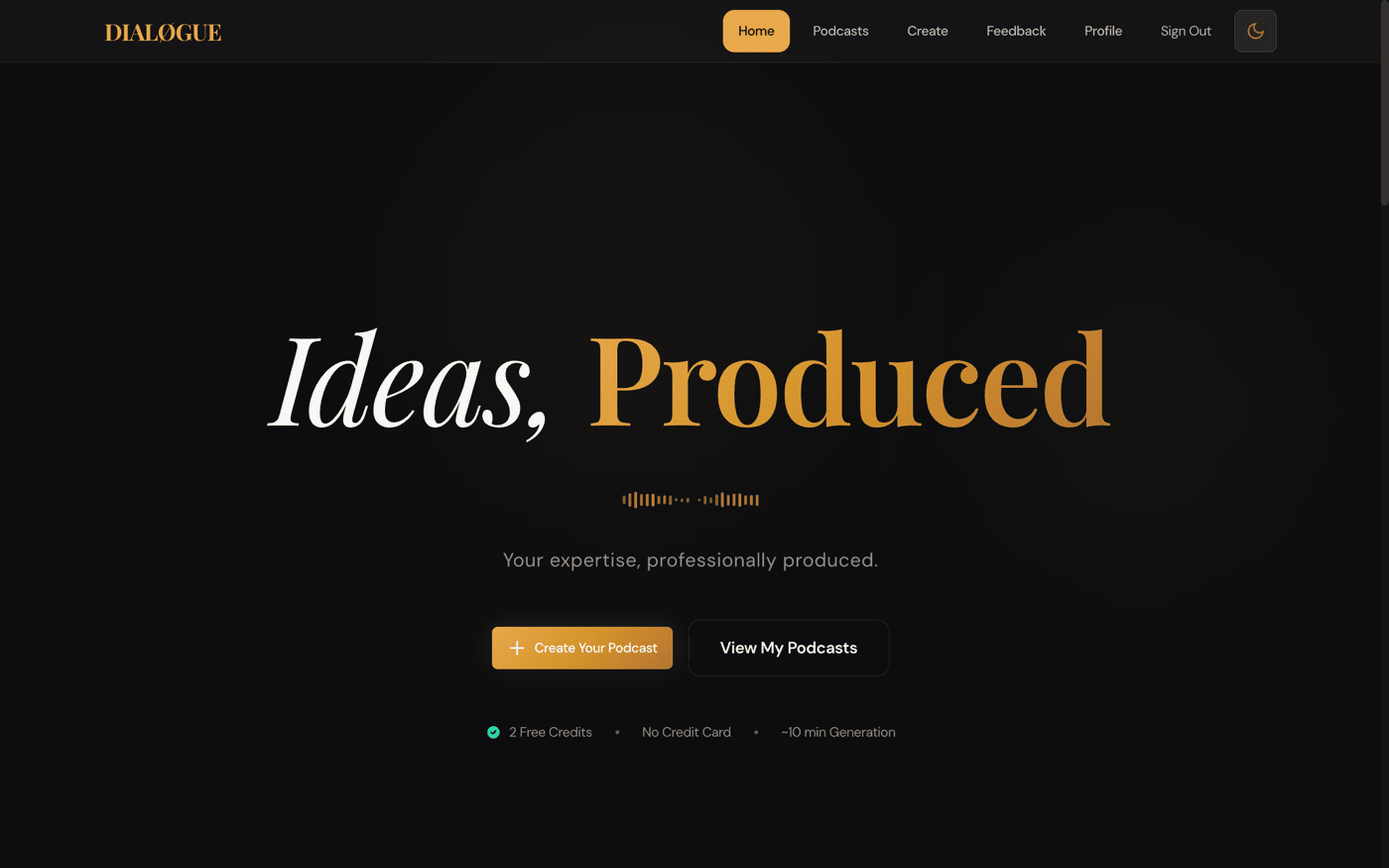
The new DIALØGUE: completely redesigned from the ground up.
What Actually Changed (And Why It Matters to You)
Faster, More Reliable
Behind the scenes, I consolidated the backend architecture significantly—what used to be a dozen separate services is now a streamlined system. You won’t see this change, but you’ll feel it: fewer errors, faster processing, more consistent results. The app just *works* better now.
Smarter Research That Shows Its Sources
The old version researched your topic but you had to trust it got the facts right.
Now, every fact comes with a source. When DIALØGUE researches “the future of remote work,” you see exactly where each insight came from—which articles, which studies, which experts. You can verify anything before it goes into your podcast. Gemini 3.0 Flash with grounding enabled is great for this.
And here’s the part I’m most proud of: when you upload your own research (more on that below) and the AI finds conflicting information online, it tells you. “Your PDF says X, but recent articles say Y.” Then you decide which version belongs in your podcast.
No more black box. Your podcast, your facts, your control.
Use Your Own Research
Got a whitepaper? An annual report? A research study you want to turn into a podcast discussion?
Upload the PDF. DIALØGUE extracts the key insights and weaves them into your podcast—while cross-referencing against live web search to make sure nothing’s outdated.
This is huge for consultants, analysts, researchers—anyone who has proprietary knowledge they want to share but doesn’t have time to write scripts from scratch.
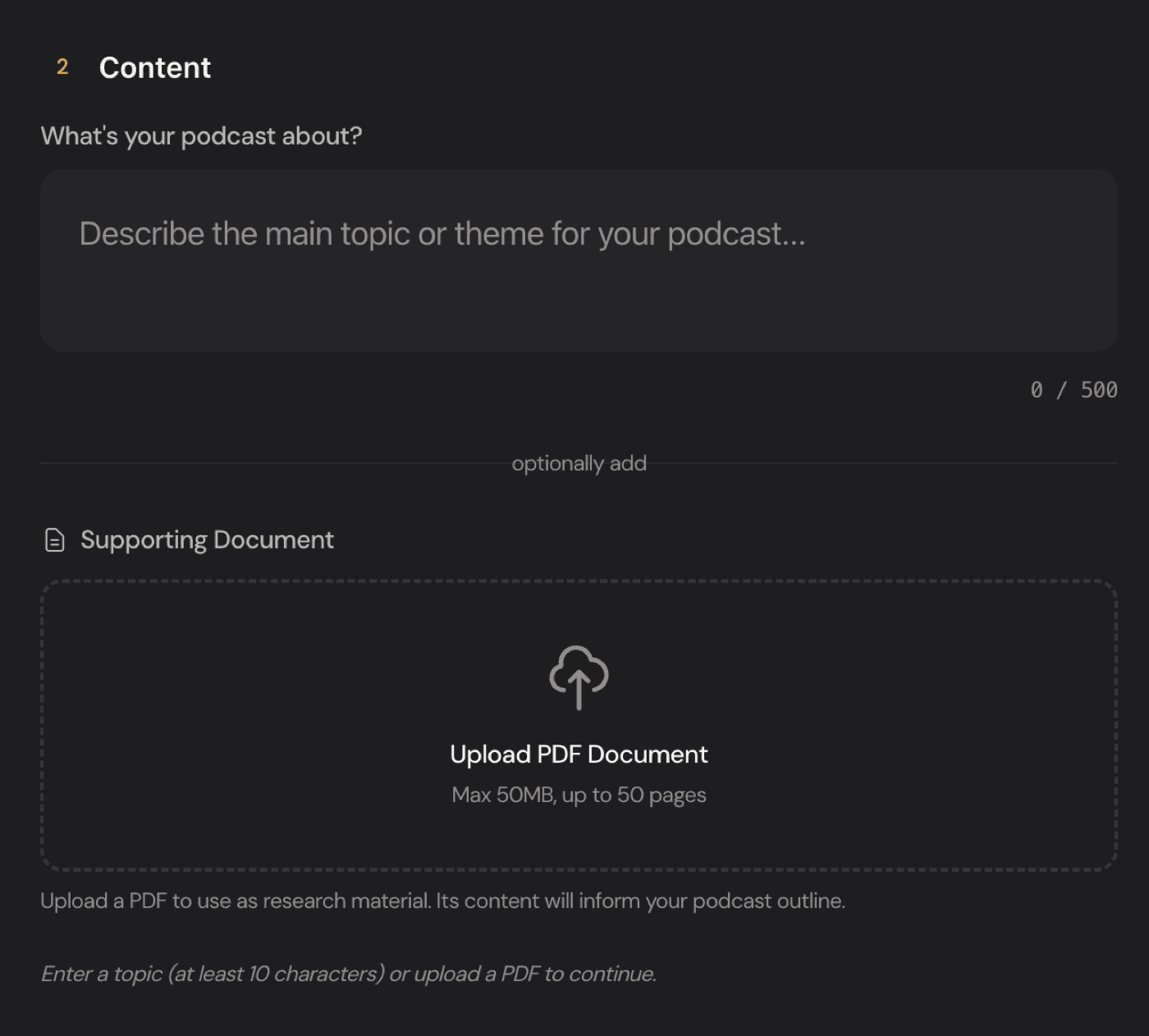
Upload your own research and DIALØGUE weaves it into your podcast.
30 Voices, Preview Any of Them
The old version had 6 voices. Now there are 30—from “informative and clear” to “excitable and engaging” to “soft and gentle.”
Each voice has a personality. Charon is informative and precise, perfect for tech topics. Fenrir is excitable and warm, ideal for interviews. Sulafat is nurturing, great for wellness content. You can customize pace (slow to fast) and tone (professional to casual).
And before you commit, you can preview any voice with your actual content. Ten seconds of your script, the voice you’re considering. Don’t like it? Try another. Only generate when you’re happy.
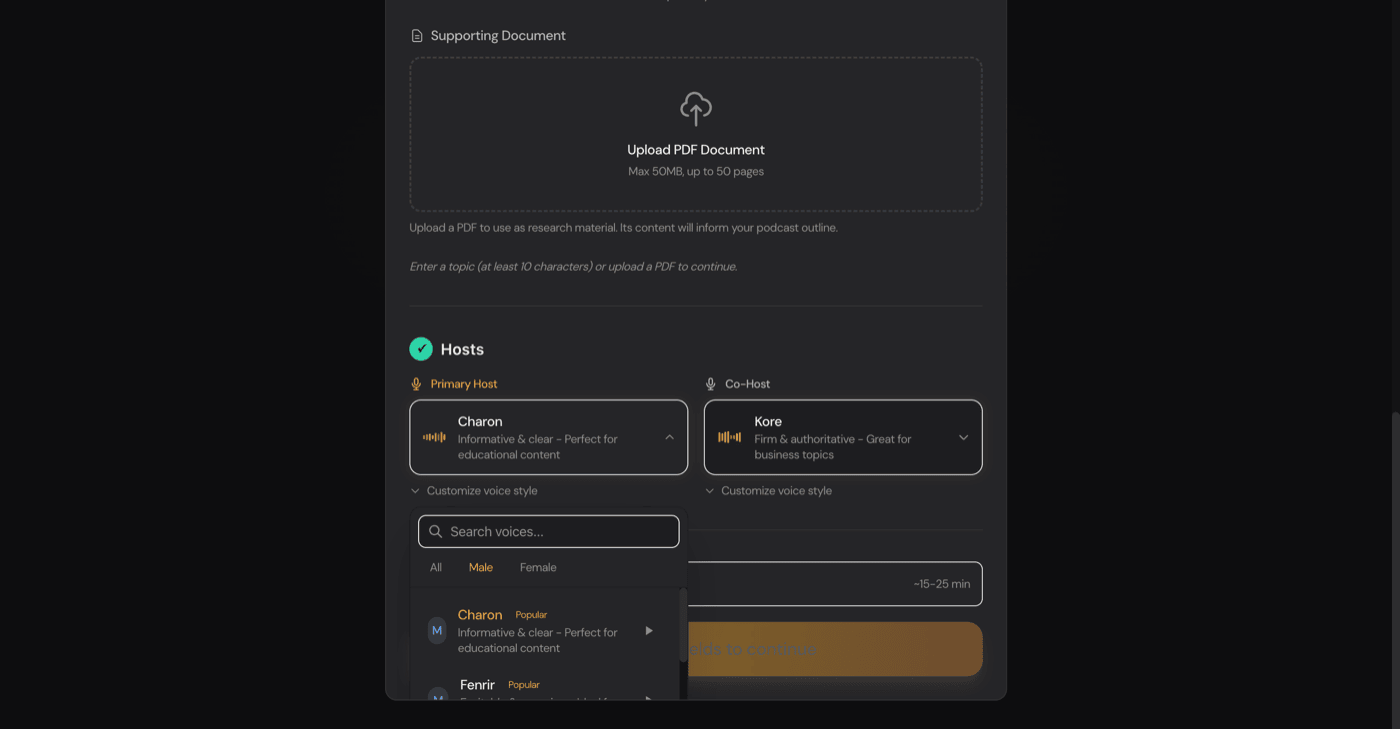
30 voices to choose from, each with its own personality.
Actually Edit Your Script
The old flow was: approve the outline, wait for audio, hope for the best.
Now there’s a pause. After the AI writes the full script, you see every word before it becomes audio. Don’t like how a segment flows? Rewrite it. Want to add a personal anecdote? Drop it in. The AI handles the structure; you perfect the message.
This is the “human in the loop” I keep talking about. The script is yours to shape.
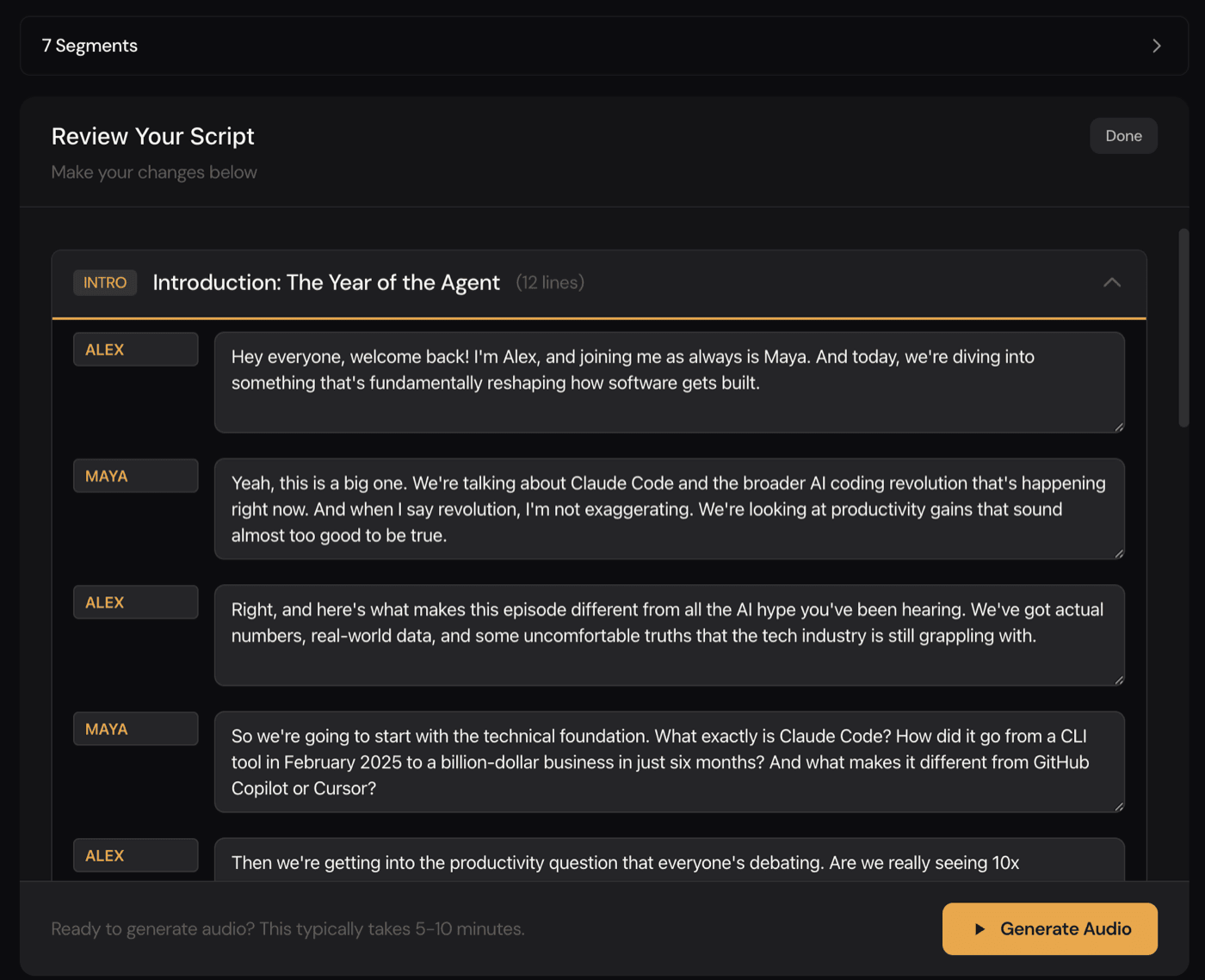
Review and edit every line before generating audio.
8 Podcast Styles to Match Your Voice
Not every podcast should sound the same. Now you can choose from 8 different styles—from casual conversation to structured debate to deep-dive analysis.
Pick the format that matches your content and your audience.
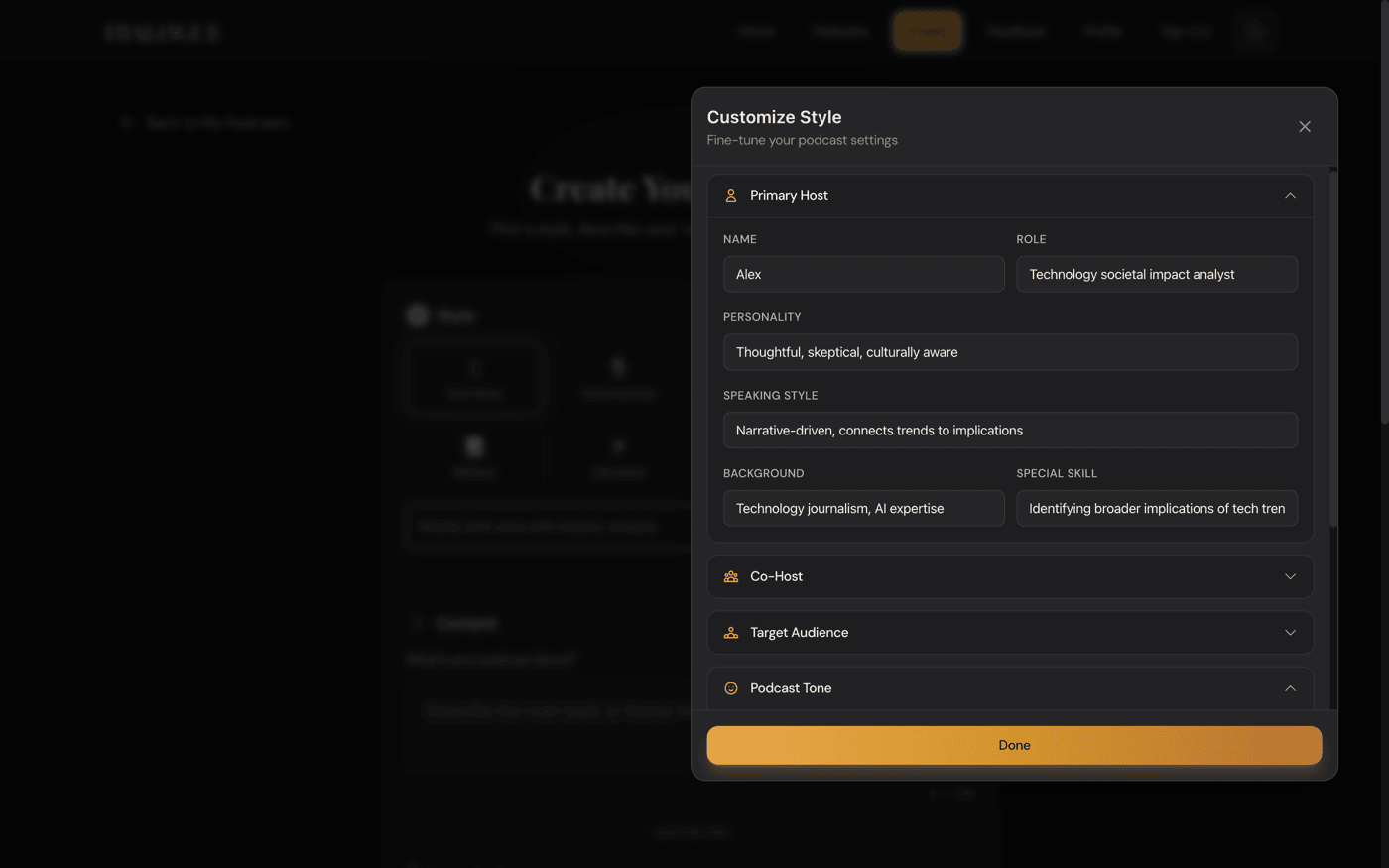
From casual conversation to structured debate—pick your format.
Real-Time Progress Tracking
The old version was a black box. Click generate, wait, hope.
Now you see exactly what’s happening: “Researching your topic…” “Writing segment 3 of 5…” “Generating audio…” No more wondering if the app crashed or if it’s actually working.
Manage Your Podcast Library
Search, filter, sort, delete. Finally.
As your library grows, you need ways to find things. Search by title or topic. Filter by status. Sort by date. Delete the ones that didn’t work out.
Small feature. Big quality of life improvement.
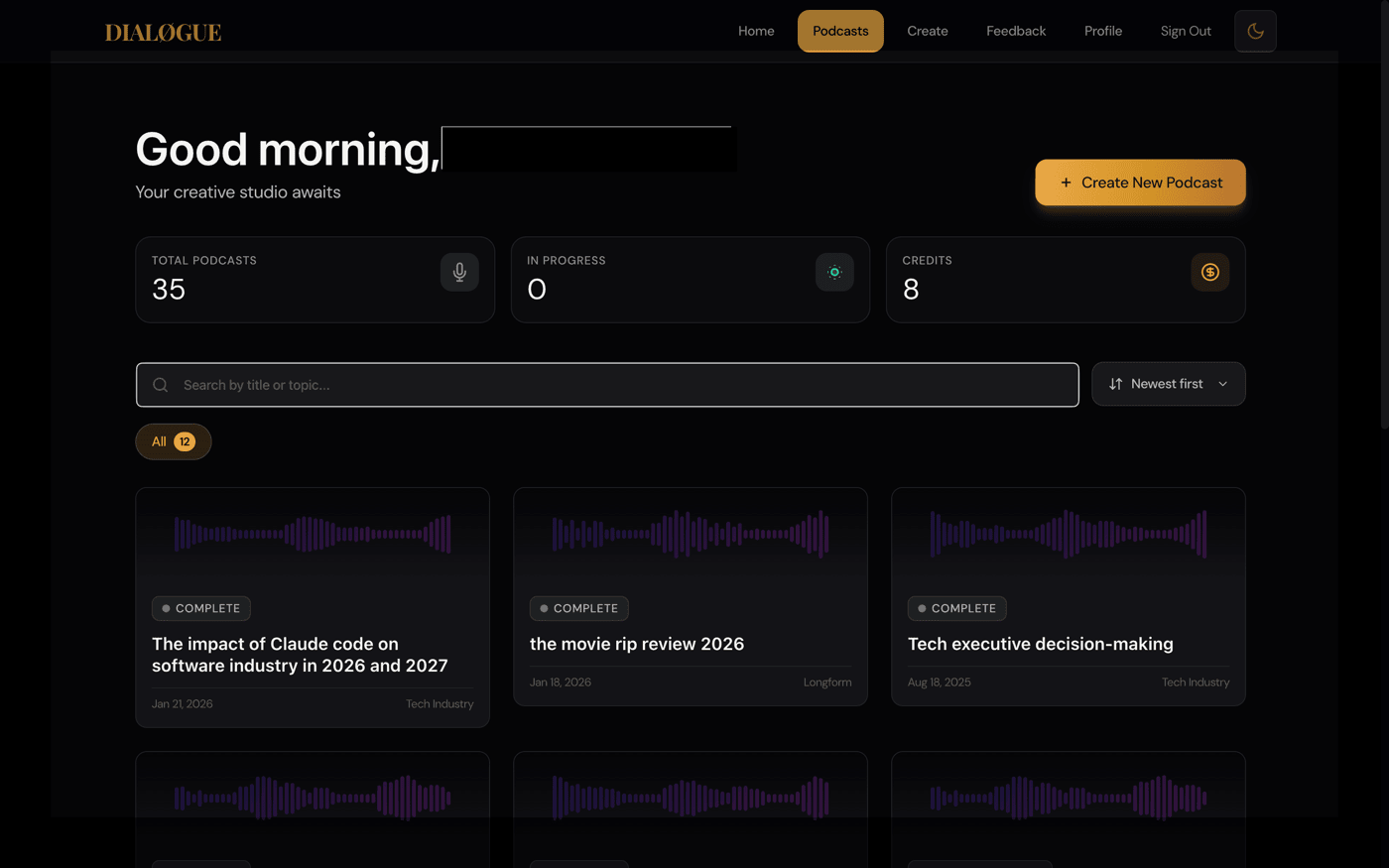
Search, filter, and manage your growing podcast library.
Optional Two-Factor Authentication
If you’re creating content with this tool, you should be able to protect your account. Now you can enable 2FA with any authenticator app.
Not flashy, but important.
The Claude Code Experience
Here’s what surprised me about working with Claude Code at this pace:
Parallel Agents Actually Work
I’d tell Claude Code: “Use multiple agents in parallel when suitable.”
And it would. One agent would map the codebase while another designed the implementation. A third would refactor existing code while I reviewed new features.
It felt like having a team. Except the team never sleeps and doesn’t complain.
Plan Mode Changed How I Think
Before writing any code, Claude Code would enter “plan mode”—exploring the codebase, mapping dependencies, proposing architecture.
The plans were often better than what I would have come up with. More thorough. More aware of edge cases. More considerate of existing patterns.
I stopped thinking of myself as the architect. I became the reviewer. The decision-maker. The taste-setter.
The Numbers
| Metric | Value |
|——–|——-|
| Total commits | 119 |
| Days elapsed | 14 |
| Files changed | 484 |
| Lines added/removed | 89,000+ |
| New voices | 6 → 30 |
| My code written | ~0 |
That last line isn’t a typo. I wrote approximately zero lines of code. I described what I wanted. I reviewed what was built. I made decisions. But the actual implementation? Claude Code.
The Part That Keeps Me Up at Night
Here’s where I get uncomfortable.
I have a teenage daughter. Smart, curious, hardworking. Everything a parent could hope for.
And I have no idea what to tell her about her future.
The skills I learned over 18 years in advertising—strategic thinking, creative problem-solving, understanding human psychology—those still matter. But the execution skills? The “how to actually make things”? AI can do that now. Often better than I could. Getting better every month.
I used to think “critical thinking” was the answer. Learn to think, and you’ll always be valuable.
But here’s the thing: AI can give you 50% of the critical thinking for any problem. Maybe 70%. The floor has been raised so high that “I can think critically” isn’t the differentiator it used to be.
What’s left? Taste? Judgment? The ability to know what’s good? Maybe. But I’m not confident enough to bet my daughter’s career on it.
The Uncomfortable Truth
I’m excited about what I built. DIALØGUE v2 is genuinely better. Users will have more control, more flexibility, more ways to make podcasts that reflect their expertise.
But I’m also scared.
Not of the technology. Of the pace.
Fourteen days ago, I had a working product. Today, I have a fundamentally different product. The old one feels primitive by comparison. And in another 14 days? Another 6 months?
Society isn’t ready for this pace of change. Our education systems aren’t ready. Our employment structures aren’t ready. Our mental models about what skills matter and what careers are stable—none of it is ready.
I’m not ready. And I’m one of the people actively building these tools.
So Why Keep Building?
Because the alternative is worse.
If AI tools are going to exist—and they are—I’d rather build ones that amplify human expertise than ones that replace it.
DIALØGUE isn’t meant to create content for you. It’s meant to help you create better content than you could alone. The interactive outline editor, the script revision pause point, the source attribution—all of it is designed to keep the human in control.
The AI does the tedious work. You make the decisions that matter.
That’s the philosophy. Whether it’s enough to navigate what’s coming? I honestly don’t know.
Try It Yourself
If you want to see what 14 days of building looks like:
DIALØGUE is live
New in this release:
– 30 AI voices (up from 6) with pace and tone customization
– PDF upload with source attribution
– Voice preview before generation
– Inline script editing
– 8 podcast style templates
– Real-time progress tracking
– Search, filter, and manage your podcast library
– MFA/2FA support
– Completely redesigned mobile-first UI
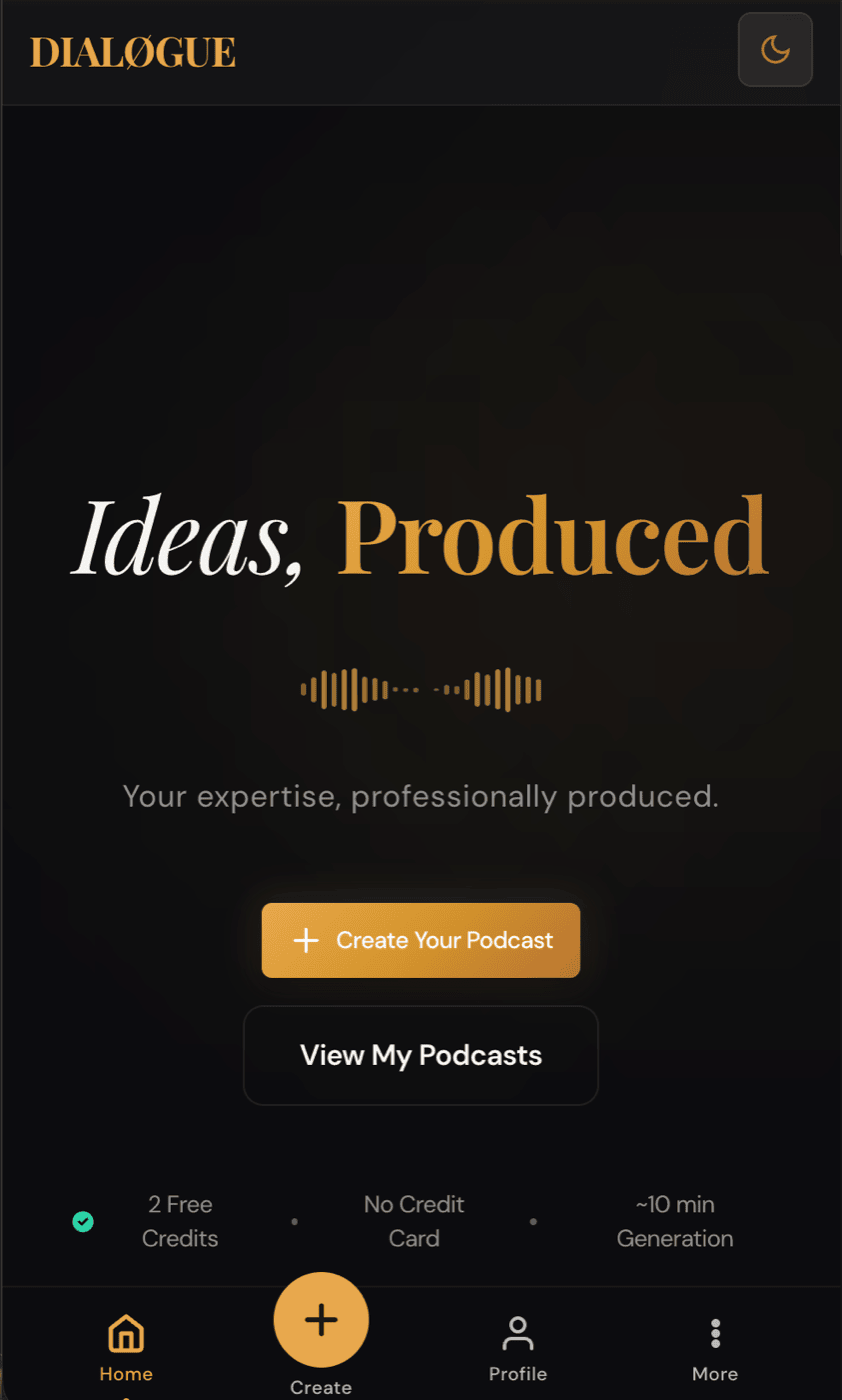
Mobile-first design that works beautifully on any device.
New users get 2 free podcasts. Create something that sounds like you.
What I’m Still Figuring Out
I don’t have clean answers. But here’s what I’m thinking about:
1. What skills will matter in 5 years? Not just “AI can’t do X”—but what will be valued when AI can do most things adequately?
2. How do we prepare the next generation? My daughter is in middle school. She’ll enter the workforce in a world I can’t predict. What should she learn?
3. Where’s the line between amplifying and replacing? I believe in human-in-the-loop design. But the loop keeps getting smaller. When does it disappear?
4. Is building faster actually better? I shipped 119 commits in 14 days. But did I ship the right things? Speed without direction is just chaos.
I don’t have answers. I’m not sure anyone does.
But I’m going to keep building, keep writing, and keep figuring it out in public.
That’s all I know how to do.
—
Still building. Still scared. Still trying to figure out what to tell my daughter.
—