•book review
5 most influential books I read in 2018
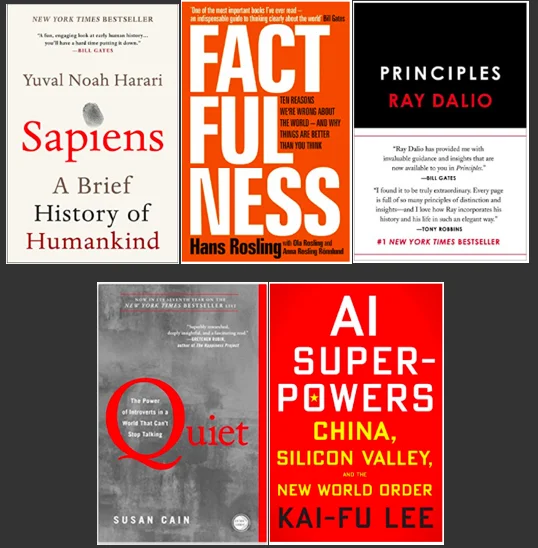
From learning to think in hundred-thousand-year timescales to discovering data-driven optimism, these five books fundamentally shifted how I see the world and work.
25 posts in this category
From learning to think in hundred-thousand-year timescales to discovering data-driven optimism, these five books fundamentally shifted how I see the world and work.
Being a brilliant individual contributor doesn't automatically make you a great manager—it's a specialty requiring years of practice and a burning desire to learn.
I discovered Ray Dalio's principles on radical transparency and debt cycles, transforming how I think about decision-making and building resilient portfolios.
Harari's books zoomed me from our 70,000-year human story to a future of immortality and divinity—fundamentally shifting how I view our brief lives today.
Rifkin's vision of the third industrial revolution transformed how I think about climate change, investment sectors, and daily choices—offering a roadmap for our species' future.
Susan Cain's "Quiet" blends neuroscience and real stories to show why introverts bring hidden strengths—giving me permission to embrace my own quiet power.
Habits can be changed if we understand how they work—this book blends science, real-life examples, and practical advice in a way that transformed how I approach my work.
This data-driven marketing book challenged my core assumptions about customer loyalty, mass marketing, and brand growth—prepare to question everything you thought you knew.
I found the perfect guide that teaches both storytelling strategy and practical writing tips—comprehensive yet digestible, with bite-sized rules under 2 pages each.
I immediately wished I'd read Andy Grove's 1983 management classic 5-6 years earlier—it would have materially changed how I managed my team and work.
Dale Carnegie's timeless reminder that a smile costs nothing yet creates everything becomes even more powerful during the holiday rush—especially for those too tired to give one.
I discovered why 93% of word-of-mouth happens offline and how six principles can make any idea contagious—no viral platform required.