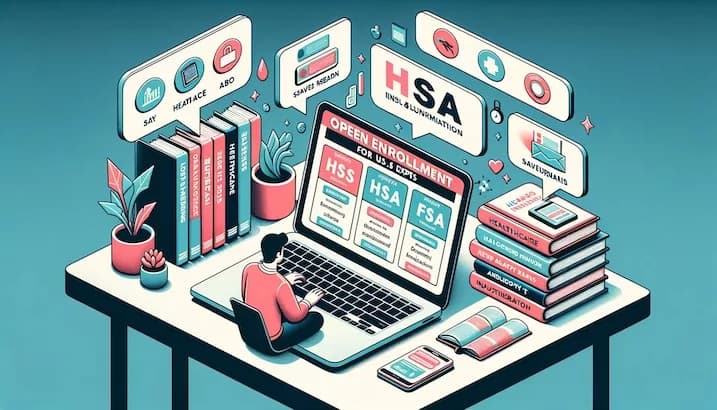
The Basics of FSA for Expats in the US
FSAs let expats save hundreds on taxes yearly by paying medical costs pretax, but the "use-it-or-lose-it" rule means strategic planning is essential.
Updated for 2026: This post was originally published in 2022. For the latest IRS figures and a comprehensive guide, see Expat Healthcare Benefits in the US: HSA, FSA & HDHP Guide (2026).
When I first arrived in the US from Singapore, the healthcare system here felt like a foreign language — and I say that as someone who has lived in multiple countries. In Singapore, healthcare is relatively straightforward: you have your CPF Medisave, you go to the doctor, the numbers make sense. In the US? There are deductibles, copays, coinsurance, in-network versus out-of-network, and then on top of all that, there are tax-advantaged accounts like FSAs and HSAs that nobody explains to you unless you ask.
I had to learn about Flexible Spending Accounts (FSAs) the hard way — by missing the enrollment window in my first year because I did not even know it existed. So here is what I wish someone had told me when I started.
What is an FSA and why should expats care?
An FSA is a tax-advantaged account offered through your employer that lets you set aside money each year — before taxes — to pay for certain medical expenses. Doctor visits, prescription drugs, dental work, vision care — these all qualify.
The reason I think every expat should at least consider it: the tax savings are real. If you earn $100,000 and contribute $2,000 to an FSA, you could save roughly $500 or more on taxes depending on your bracket. That is money you would have spent on medical expenses anyway — you are just spending it more efficiently.
Coming from Singapore where I never had to think about this stuff, I have to admit the whole concept felt unnecessarily complicated at first. But once I understood the basics, it was a no-brainer to enroll :)
How does it work?
FSA is employer-sponsored, so your company has to offer it. You choose how much to contribute during open enrollment, and that amount is deducted from your paycheck before taxes throughout the year. This is the key benefit — pretax dollars mean your taxable income goes down.
Your FSA funds can cover eligible expenses for you, your spouse, and your dependent children. There is also a Dependent Care FSA variant for childcare costs like daycare — which, if you have kids in the US, you know is outrageously expensive compared to most places in Asia T.T
How to set it up
Check with your employer's HR or benefits portal during open enrollment (usually in the fall for the following year). You will choose your contribution amount then. Some employers allow mid-year changes, but typically only if you have a qualifying life event like having a baby or getting married.
What expenses does it cover?
Quite a lot, actually:
- Doctor and specialist visits
- Prescription medications
- Dental and vision care
- Mental health services
- Some over-the-counter medications and supplies
FSA cannot be used for non-medical expenses, though. And — this is important — it cannot typically be used for health insurance premiums themselves (there are some exceptions, but check with your specific plan).
How to use your FSA funds
This part is actually easy. Most FSAs come with a debit card. You just swipe it at the doctor's office, pharmacy, or wherever you are paying for eligible expenses. No paperwork, no submitting receipts (in most cases). After coming from Singapore where reimbursement processes at some companies involved scanning receipts and filling out forms, I was pleasantly surprised by how seamless this was.
Tips from my own experience
- Enroll as soon as you are eligible. You can only use FSA funds for expenses incurred after enrollment, so missing your enrollment window means missing a full year of tax savings. I learned this one the hard way.
- Understand the "use-it-or-lose-it" rule. This is the big catch with FSAs. Any money you do not use by the end of the plan year (or a short grace period, depending on your employer) is forfeited. Gone. So you need to estimate your medical spending reasonably well. I would rather contribute slightly less and use it all than contribute too much and lose it.
- Check the contribution limits. In 2023, the IRS set the maximum FSA contribution at $3,050. This amount changes year over year, so verify the current limit with your employer.
- Keep your receipts. Even with the debit card system, it is good practice to save documentation in case your FSA administrator asks for verification. I keep a folder in Google Drive — takes two seconds to snap a photo.
If you want to go deeper on FSA, I wrote a more detailed practical guide on FSA for expats.
Quick FAQs
Can I use FSA to pay for my dependent children's medical expenses? Yes — FSA covers eligible expenses for your spouse and dependent children.
How do I know if my employer offers FSA? Check your benefits portal or ask HR. Most mid-to-large employers offer it.
I am not a US citizen. Can I still use FSA? Yes. FSA is available to anyone employed in the US, regardless of citizenship. As long as your employer offers it, you can enroll.
Can I use FSA for non-medical expenses? No. FSA is strictly for eligible medical and dependent care expenses.
If your employer offers a High Deductible Health Plan, you may want to compare FSA with a Health Savings Account (HSA) instead — HSAs have their own advantages, including the fact that unused funds roll over year to year. I wrote about the pros and cons of HDHPs to help you decide.
As always, do your own research before committing any amount of money — everyone's situation is different, and I am definitely not a financial advisor. I am just an expat who had to figure this all out from scratch :)
Have you used an FSA? Any tips or gotchas you discovered that I did not mention?
Cheers,
Chandler
P.S. I recently created a group on Facebook called Asian Expats in the US so that we can share and discuss more tips directly. Feel free to join.